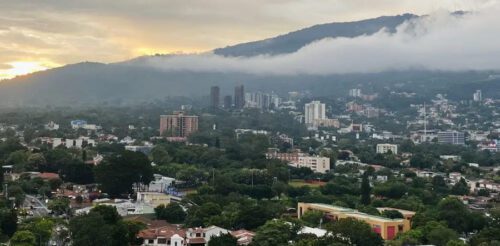
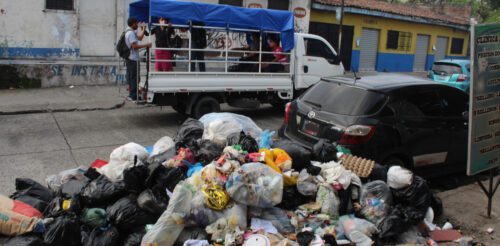
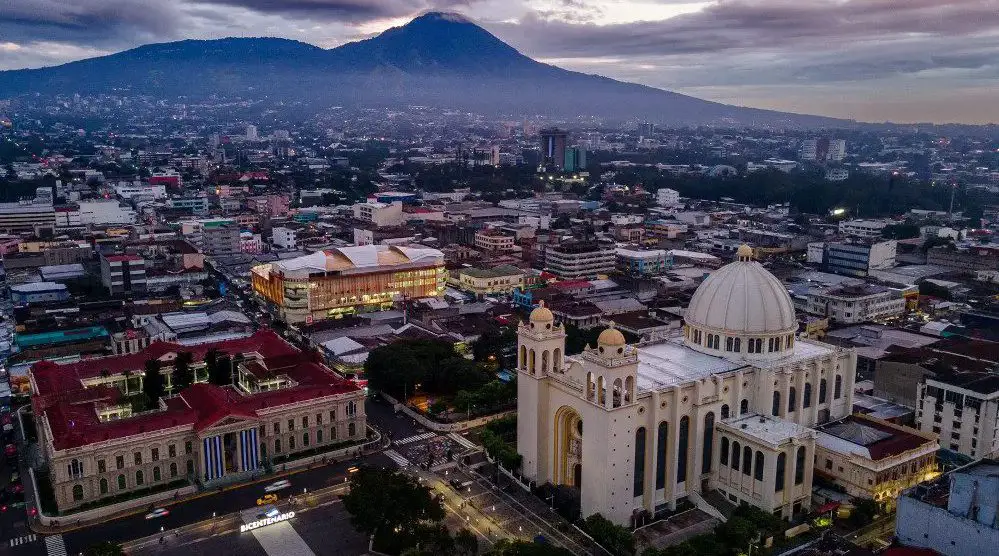
 City of San Salvador in El Salvador.
Living in El Salvador today feels different compared to a decade ago. Streets that were once avoided after dark are busier than ever, tourism is on the rise, and families are exploring places they previously considered dangerous or inaccessible.
But better security hasn’t made every day problems disappear. Salvadorans still face low wages, high grocery prices, limited job opportunities, inadequate public services, and other challenges that affect everyday life.
Understanding El Salvador means looking beyond both extremes. The country has changed considerably, and so has the experience of living here. For locals, returning Salvadorans, retirees, remote workers, and foreigners, the advantages can be substantial—but circumstances matter.
- What Is It Like to Live in El Salvador?
- Cost of Living
- Housing and Where People Live
- Safety and Crime
- Jobs, Salaries, and Employment
- Healthcare
- Transportation and Traffic
- Internet, Electricity, Water, and Basic Services
- Food and Everyday Shopping
- Weather, Beaches, and Outdoor Life
- Family, Community, and Salvadoran Culture
- Living in El Salvador as a Foreigner
- Returning After Living Abroad
- Benefits of Living in El Salvador
- Challenges of Living in El Salvador

What Is It Like to Live in El Salvador?
Daily life in El Salvador has a different rhythm depending on where you call home. Living in urban San Salvador feels completely different from life in Sensuntepeque, Suchitoto, Santa Ana, coastal communities, or rural villages.
Residents in larger cities have access to shopping malls, restaurants, private hospitals, universities, supermarkets, entertainment, and modern services. On the other hand, smaller communities generally offer a slower pace and stronger neighborhood connections.
One advantage is distance. You can leave San Salvador in the morning, spend several hours at the beach, eat fresh seafood, and return home without turning the outing into a major trip.
Cost of Living in El Salvador
El Salvador can be affordable to live in, but simply calling it a “cheap country” doesn’t tell the whole story. Your spending will depend heavily on where you live, how much you earn, and the lifestyle you want.
Housing is a good example. Outside the most popular neighborhoods in the San Salvador metropolitan area, you can often find homes and apartments for much less than you’d pay in a major U.S. city.
But prices climb quickly in desirable areas, especially if you’re looking for a modern apartment, a larger home, added security, or other amenities. Your choice of neighborhood can make a big difference in your monthly budget.
Groceries are also a mixed bag. Locally produced fruits, vegetables, beans, tortillas, and seasonal foods can be reasonably priced, especially when you shop at local markets instead of relying only on supermarkets.
The cost-of-living issue becomes clear when you compare everyday prices with local salaries. The monthly minimum wage for workers in commerce, industry, and services is $408.80.
That creates two very different experiences. Someone earning a foreign pension or remote-work salary may find El Salvador quite affordable. A family depending on local wages, however, may need to manage its budget much more carefully.
Housing and Where People Live
When it comes to housing, El Salvador gives you plenty of choices. You’ll find everything from simple neighborhood homes and countryside properties to gated communities and modern apartments.
What you’ll pay depends a lot on where you choose to live, and prices can change quite a bit even between nearby neighborhoods.
San Salvador and the surrounding metropolitan area offer the biggest selection of jobs and everyday services. Many people live there because schools, hospitals, offices, shopping centers, restaurants, and entertainment are usually within easier reach.
Smaller cities and towns offer a slower, more relaxed way of life. Rent is often cheaper, traffic isn’t as hectic, and communities can feel more connected. On the other hand, you may need to travel to a larger city for specialized healthcare, universities, certain jobs, or services you can’t find locally.
Safety and Crime in El Salvador
Security represents one of the most dramatic changes in Salvadoran life. Communities that were once dominated by gangs have experienced major reductions in violence, changing how many residents move around the country.
Government statistics show that El Salvador recorded only 82 homicides in 2025, bringing the homicide rate down to 1.3 per 100,000 people, the lowest in Latin America.
| Year | Total Homicides | Daily Homicide Rate | Homicides per 100,000 Inhabitants |
|---|---|---|---|
| 2026 *Sep 30 | 47 | 0.17 | 0.99 |
| 2025 | 82 | 0.22 | 1.36 |
| 2024 | 114 | 0.31 | 1.89 |
| 2023 | 156 | 0.43 | 2.4 |
| 2022 | 495 | 1.36 | 7.8 |
| 2021 | 1152 | 3.16 | 18.1 |
| 2020 | 1341 | 3.67 | 21.2 |
| 2019 | 2398 | 6.57 | 35.8 |
| 2018 | 3346 | 9.17 | 50.4 |
| 2017 | 3962 | 10.85 | 60.2 |
| 2016 | 5280 | 14.47 | 81.0 |
| 2015 | 6656 | 18.24 | 106.3 |
| 2014 | 3921 | 10.74 | 61.3 |
| 2013 | 2513 | 6.88 | 40.6 |
Falling gang violence can affect simple decisions: visiting relatives, opening businesses, taking children somewhere, using public spaces, or traveling through communities that people once avoided.
However, the security transformation has another important side. El Salvador has remained under a state of exception introduced in March 2022, which suspended certain constitutional and due-process protections.
Human Rights Watch and Amnesty International have reported allegations of arbitrary arrests, mistreatment and torture, enforced disappearances, deaths in custody, and problems with due process.
Amnesty International reported in July 2026 that authorities had detained more than 90,000 people since the state of exception began in March 2022.
These two realities are part of life in El Salvador today. Gang violence has dropped dramatically, making many communities safer, but human rights organizations continue to raise serious concerns about how the government carries out its security policies.
Jobs, Salaries, and Employment
Finding a job that pays well can still be tough for many Salvadorans. Even when you have steady work, making your paycheck cover everything isn’t always easy, especially once you add up food, rent, transportation, electricity, education, healthcare, and those unexpected expenses that come along.
Remote workers and people who earn money from abroad often find themselves in a different financial situation. A salary that may seem average in the United States can go much further in many parts of El Salvador.
Small businesses also play a big role in everyday life. Across the country, you’ll find family-run shops, restaurants, bakeries, workshops, market stalls, transportation services, farms, and all kinds of informal businesses supporting local families and communities.
Healthcare in El Salvador
El Salvador has public and private healthcare options. Residents often choose between them according to income, location, insurance coverage, urgency, medical specialty, and the type of treatment they need.
Healthcare options look very different depending on where you live. Even under the public healthcare system, larger cities will offer more hospitals, private clinics, specialists, laboratories, and diagnostic services.
Smaller towns have fewer medical facilities and specialists. You can find local clinics and health centers, but people may need to travel to a larger city for certain tests, treatments, or specialist appointments.
Most Salvadorans rely on the country’s free public Universal Health System for medical care.
Transportation and Traffic
Getting around El Salvador can be easy when you look at the distance, but traffic can quickly change that. The country is small, yet a short drive can sometimes turn into a long commute.
The heaviest traffic is around larger cities such as the Greater San Salvador, San Miguel, and Santa Ana, especially during rush hour.
In El Salvador, you plan when to leave home based on traffic conditions, not simply on how many kilometers you need to travel.
Public buses are an important part of daily life because they’re affordable and connect cities, towns, and smaller communities. Taxis and ride-hailing services offer another option, especially in larger cities and popular tourist areas.
Having your own car gives you more freedom, particularly if you have a family or live outside a major urban area. Just remember to factor in fuel, maintenance, insurance, parking, and plenty of traffic.
Internet, Electricity, Water, and Basic Services
Internet access is an important part of Salvadoran life. Urban areas generally provide multiple internet and mobile options, making remote work and online communication practical.
Electricity is widely available, but costs can become an important household expense. Air conditioning, electric appliances, and other high-consumption devices can make a noticeable difference in monthly bills.
Water is more complicated. Service reliability can vary by location, so anyone choosing a home should ask neighbors about supply schedules, water pressure, storage tanks, and interruptions before signing a lease.
This is where local research matters. Two attractive homes only a few kilometers apart can offer very different experiences when it comes to water, road access, internet, noise, and municipal services.
Food and Everyday Shopping
Food is one of the best parts of living in El Salvador. Pupusas get most of the attention, but Salvadoran food goes far beyond them, with tamales, soups, seafood, grilled meats, beans, cheeses, tropical fruits, and plenty of regional favorites.
Traditional local markets are still part of everyday life. At these markets, you can shop for fresh fruits and vegetables, meat, household basics, and prepared food at lower prices—often while supporting local vendors and small family businesses.
Supermarkets and shopping centers make things more convenient, especially in larger cities. They also carry a wider selection of imported foods and international brands that you may not find at smaller neighborhood stores or local markets.
Buying local foods can help you save money. By regularly purchasing seasonal produce, tortillas, beans, eggs, and local cheeses from farmers’ markets, you will likely spend less than someone who often relies on supermarkets or imported goods.
Weather, Beaches, and Outdoor Life
El Salvador’s tropical climate means warm temperatures throughout much of the year, with conditions changing according to elevation.
The year revolves largely around dry and rainy seasons rather than four distinct seasons. Heavy rains can cause flooding, landslides, road problems, and transportation disruptions in vulnerable areas.
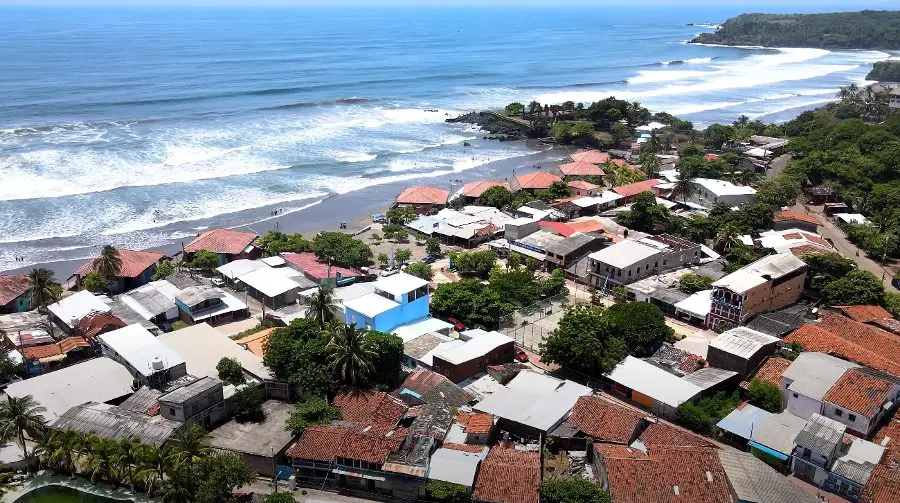
One of the best things about living in El Salvador is having nature so close by. Beaches, volcanoes, lakes, forests, coffee-growing mountains, archaeological sites, and charming small towns are often close enough for an easy weekend trip.
You can surf on the Pacific coast, eat lunch beside a lake, visit a mountain town, or hike around a volcano without traveling across a huge country.
Family, Community, and Salvadoran Culture
Family remains central to Salvadoran social life. Weekends, birthdays, religious celebrations, holidays, football matches, and meals frequently become opportunities for extended families and friends to spend time together.
Community life often feels more intimate in smaller towns. Neighbors usually know each other, and local businesses establish relationships with regular customers. Additionally, festivals, religious celebrations, and community events bring families and friends together throughout the year.
Living in El Salvador as a Foreigner
If you are a foreigner considering El Salvador as your next home, you should separate vacation experiences from everyday living. A week at the beach tells you little about dealing with rent, traffic, banking, healthcare, utilities, or rainy-season problems.
Spend time in the community where you intend to live. Visit supermarkets, drive during rush hour, check internet service, investigate healthcare, and experience ordinary weekdays rather than judging everything from tourist areas.
Also, immigration and residency rules can change, so prospective residents should verify current requirements with Salvadoran authorities before relocating.
Returning to El Salvador After Living Abroad
Returning Salvadorans have another experience entirely. Familiar language, food, relatives, and traditions can make coming home comfortable, but years abroad may create expectations that no longer match everyday Salvadoran life.
Some returnees discover a country dramatically different from the one they left.
At the same time, adjusting to wages, traffic, customer service, public infrastructure, and different expectations about time can require patience. Returning home doesn’t automatically eliminate culture shock.
Benefits of Living in El Salvador
El Salvador has plenty of things that can make everyday life enjoyable. You don’t have to travel far to reach beaches or mountains, the weather stays warm most of the year, and family ties remain an important part of daily life.
Add great food, growing tourism destinations, and a major drop in gang violence, and the country offers a lifestyle that has changed considerably in recent years.
The country’s size is especially convenient. You don’t need a domestic flight to experience a completely different landscape. Mountains, colonial towns, lakes, volcanoes, cities, archaeological sites, and Pacific beaches sit relatively close together.
Challenges of Living in El Salvador
Living in El Salvador has its challenges. Low wages, informal jobs, frustrating traffic, water problems, limited infrastructure, healthcare access, and the high cost of imported goods can make everyday life harder.
Economic circumstances shape how strongly people experience those problems. Life on $400 or $500 monthly looks very different from life supported by a $2,000 foreign pension or remote salary.
That distinction matters whenever someone describes El Salvador as affordable. Cost of living isn’t simply about prices; it’s about the relationship between those prices and the income available to pay them.

Life in El Salvador
There’s no single Salvadoran lifestyle. A professional in San Salvador, farmer in Chalatenango, shopkeeper in Sensuntepeque, retiree near the coast, and remote worker in a gated community experience different versions of the country.
For some people, El Salvador offers exactly what they’re looking for: warm weather, strong family ties, better security, beautiful scenery, and a more relaxed pace of life.
Others may care more about finding good jobs, earning higher wages, accessing reliable public services, or dealing with infrastructure and legal issues.
To truly understand life in El Salvador, you must look beyond the old stereotypes and the newer image promoted to tourists and investors. The country has changed significantly, but these changes have not resolved every problem.